
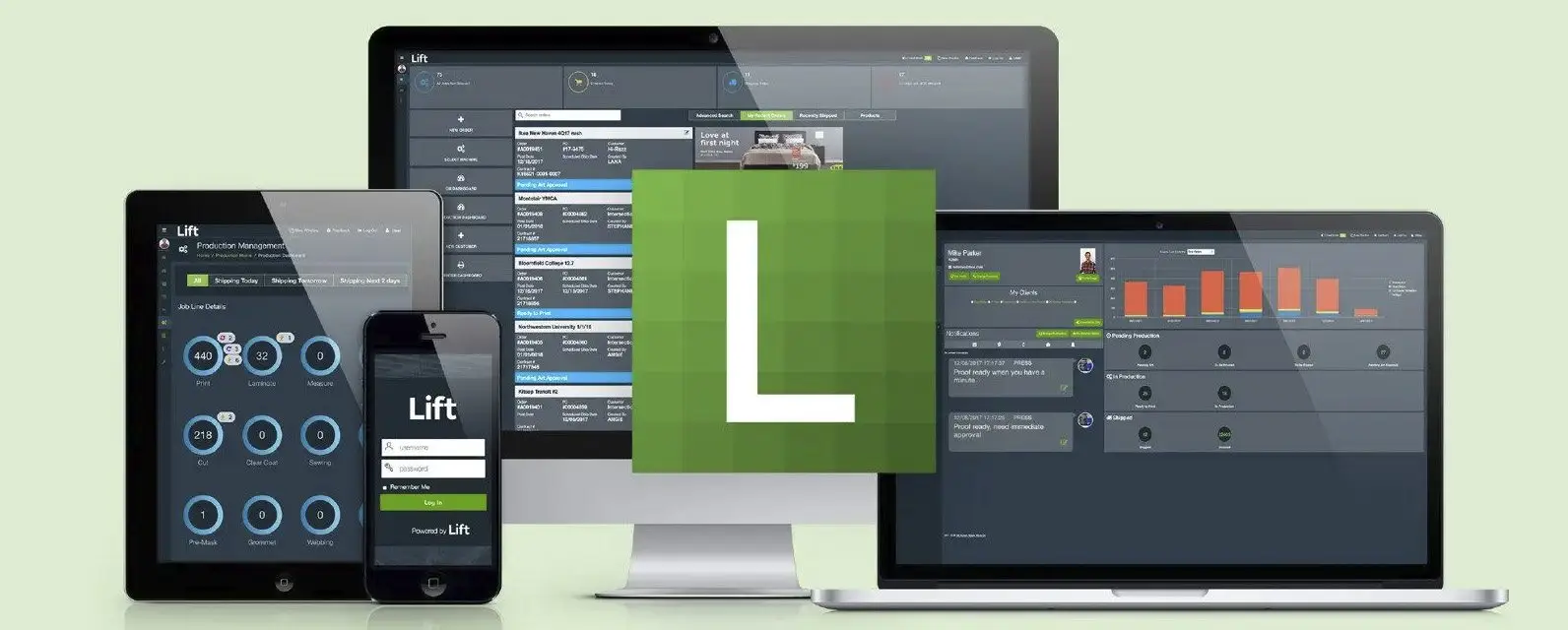
The ERP/MIS market for the print industry is crowded with solutions claiming to offer the “best” workflow automation and integration. Every vendor promises a single platform to run every aspect of your print business. But do any truly stand out? Enter LiftERP, part of Durst’s Smart Factory portfolio. What makes LiftERP truly different?
LiftERP competes in the mid-to-enterprise segment of the print industry ERP market, targeting operations that require:
While many solutions offer these (or similar) capabilities on paper, LiftERP is “built different.” Unlike competitors that evolved from legacy offset platforms, Lift was built from the ground up for digital print operations. Its Oracle-based architecture provides optimization, flexibility, and responsiveness that retrofitted systems struggle to match.
The result is automation that delivers measurable cost savings. One of LiftERP’s first installs, Firehouse Image Center (Indianapolis, Ind.), for example, has saved over $300,000 in labor costs alone. A more recent installation, Georgia Printco (Lakeland, Ga.), has saved over $250,000 in the cost of goods.
These are notable savings considering that both Firehouse Image Center and Georgia Printco are midsized companies. Although both companies opted for the full LiftERP solution, Durst offers LiftSBE for small to mid-sized businesses looking to get into automation at a less robust level, as well.
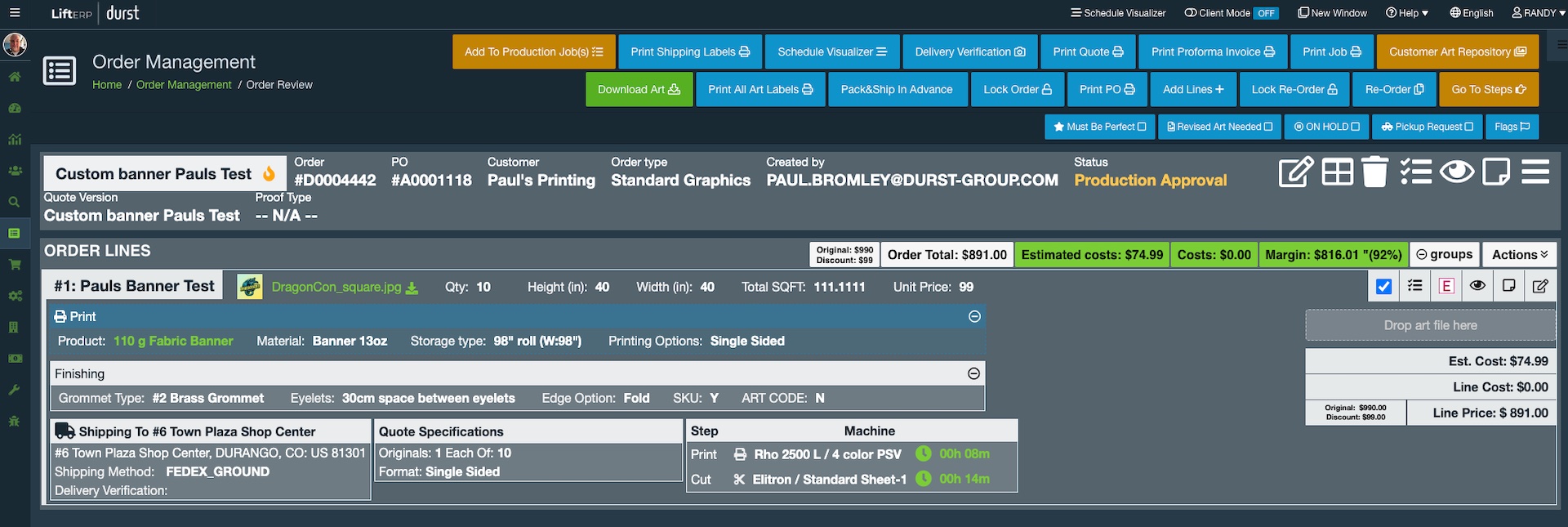
One of the underlying factors driving the savings achieved by LiftERP users is that the solution is incredibly intuitive to use. This streamlines installation, use, and training, all of which translate into cost savings.
Chris Clarke, Chief Technology Officer for Georgia Printco, notes that, thanks to the ease of use of the Lift interface, his company has reduced its training time for new hires by 25%. While hiring remains a challenge in the printing industry, LiftERP has made it just a little easier for Georgia Printco since “it widens the pool of candidates we can choose from,” Clarke says.
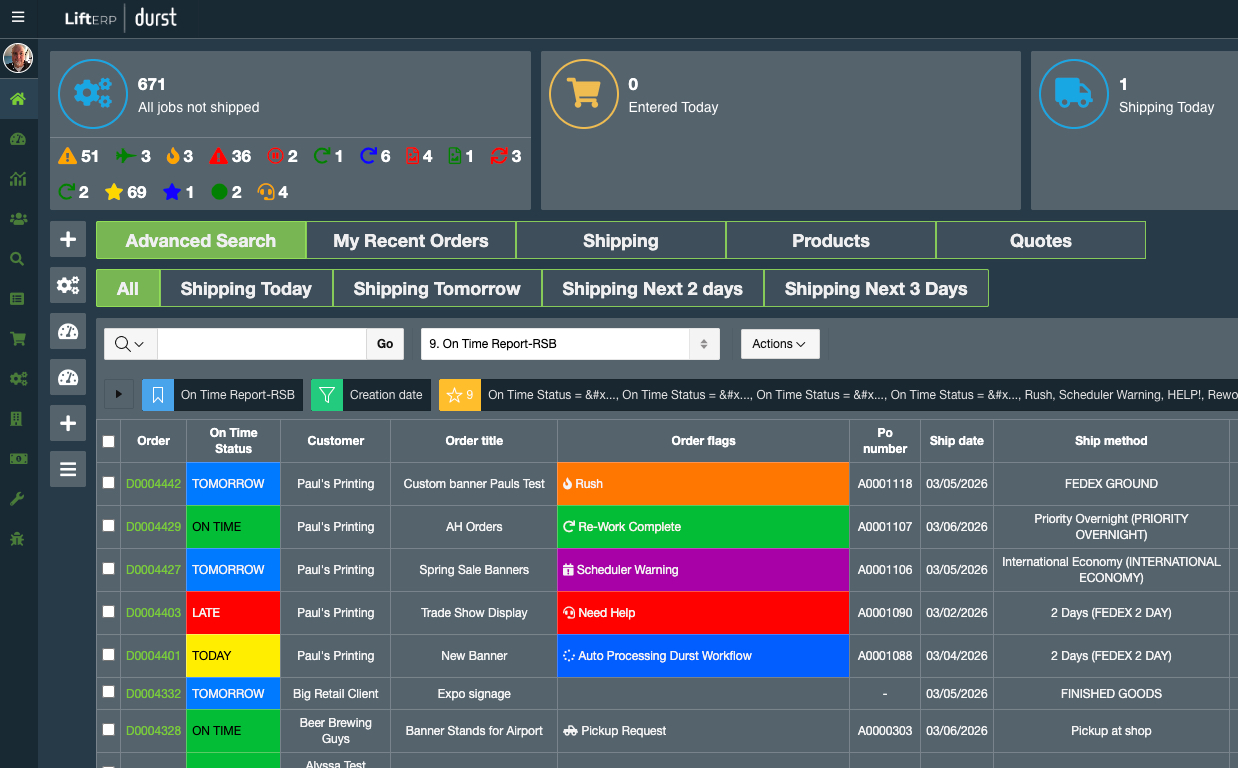
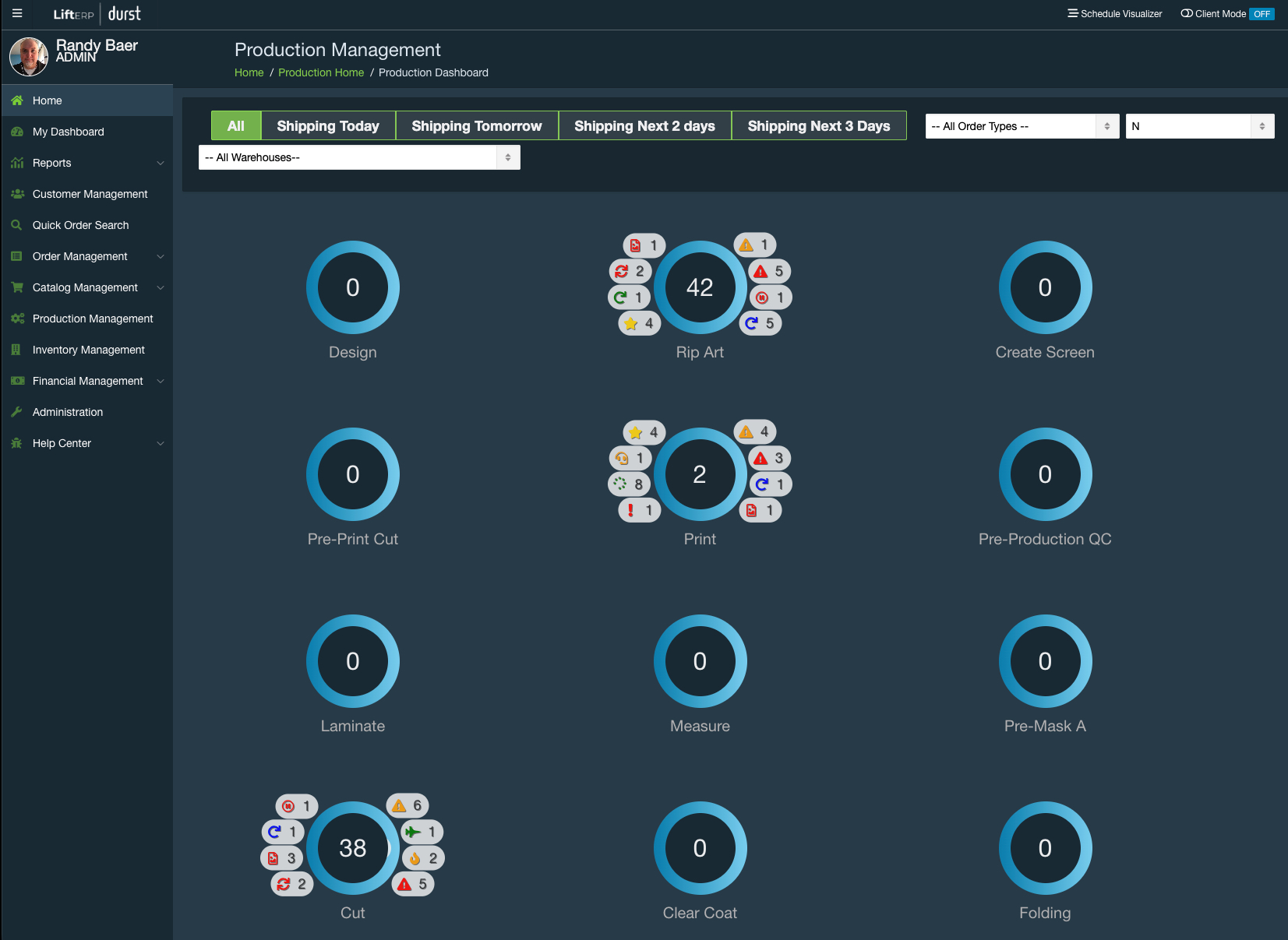
One of the reasons for this shortened learning curve is Lift’s highly visual interface. Rather than navigating through text-heavy screens, users interact with a colorful, intuitive dashboard that resembles a gameboard, making complex production workflows easy to understand at a glance.
Ted Corman, CEO, Firehouse Image Center, places a high value on this benefit. “In a matter of seconds, our production manager can see the status of all of the jobs in the shop in an easy-to-understand way,” he explains. “It also allows our team to configure the data that gets seen, down to the operator, the way they want it.”
For example, the production manager might want to see only rush orders. Prepress staff might want to see only files that failed automated preflight. Shipping personnel might want to view only items scheduled for that day’s shipment. Data is updated in real time.
The system also allows users to filter by vertical, dynamically adjusting the interface to show only relevant information.
Shipping management is handled directly within the ERP rather than requiring a separate system. This means staff aren’t switching between multiple programs throughout the day. As a result, Lift reduces the likelihood of data entry errors and eliminates the time lost logging in and out of different systems.
Dramatic time savings are also delivered by LiftERP’s optional automated prepress module. Traditional prepress workflows involve manual file review, preflight checking, and proof generation, processes that typically consume one to two days before customers receive proofs for approval. With LiftERP, customers can receive proofs in a matter of minutes.
Approximately 70% of incoming files can be handled without manual intervention. Files that meet the system’s quality parameters are automatically preflighted and converted to production-ready proofs that go directly to the customer for approval.
“Once the proof has arrived, the customer gets a notification so they can approve it right away,” says Corman. “If they don’t, we can have the system ping them every four hours. Or every two.” The only way to make it easier and faster, Corman says, “would be to approve it myself.”
Thanks to this level of automation, Firehouse Image Center has seen its prepress team drop from five to one. “Now, our prepress person handles only files that cannot be processed automatically,” says Corman.
The customer experience has improved, as well. When Firehouse Image Center first transitioned to Lift, they didn’t tell customers right away. So when proofs were suddenly being turned around much more quickly, customers were stunned. “One customer even called me to personally thank me for giving her jobs such personal attention,” Corman recalls.
While these operational improvements do more than make life easier for everyone, they also translate directly to bottom-line savings. Proactive LiftERP users routinely save $100,000 or more annually, with savings concentrated in three primary areas: labor efficiency, cost of goods control, and communication efficiency.
Every print operation faces recurring customer inquiries: Will my job ship today? What’s my tracking number? While these questions represent legitimate needs, answering them manually consumes significant CSR time. Implementing full automation, including automated quoting, can translate into huge cost savings from quoting jobs alone.
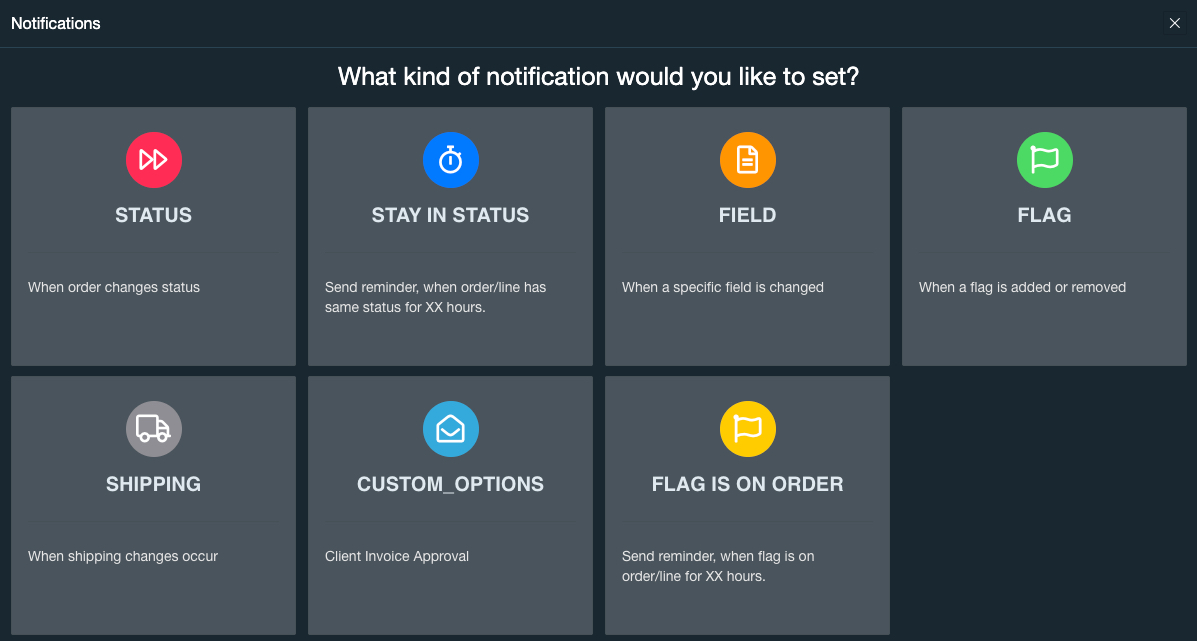
CSR time is slashed by other features that provide automated notifications and allow salespeople and customers to answer their own questions through the system. For example, customers can set up notifications for status changes they care about (when jobs clear printing, when they ship, when they’re delivered) through text, email, or even social media.
Invoices generate and transmit automatically. Tracking information appears immediately in the customer portal.
“Not every printer gives customers that level of access, but those who do find that it’s a huge time saver,” says Leland Morgan, North American Product Manager Durst Software. “Those customers are no longer making phone calls and waiting for answers. They can log in and find their own answers in a matter of minutes.”
Self-service options free up CSRs to focus on more complex customer interactions that genuinely require human attention. The reorder process is simplified as well. LiftERP retains all specifications, pricing, and files, making reorders as simple as confirming details and submitting.
You want another time-saver? Let’s talk about LiftERP’s automated quoting. The system is set up so that quotes are generated automatically once the salesperson, CSR, or customer makes their selections in the system. Only the options appropriate to each job can be selected, further eliminating potential errors in the order process.
Consider a customer ordering a product brochure. They select “brochure” from the product menu, and the system presents only the relevant options: quantity, size, paper stock, color, finishing, and coating. The customer selects their preferences, and the system instantly generates a quote with all specifications locked in—no back-and-forth required, no possibility of miscommunication.
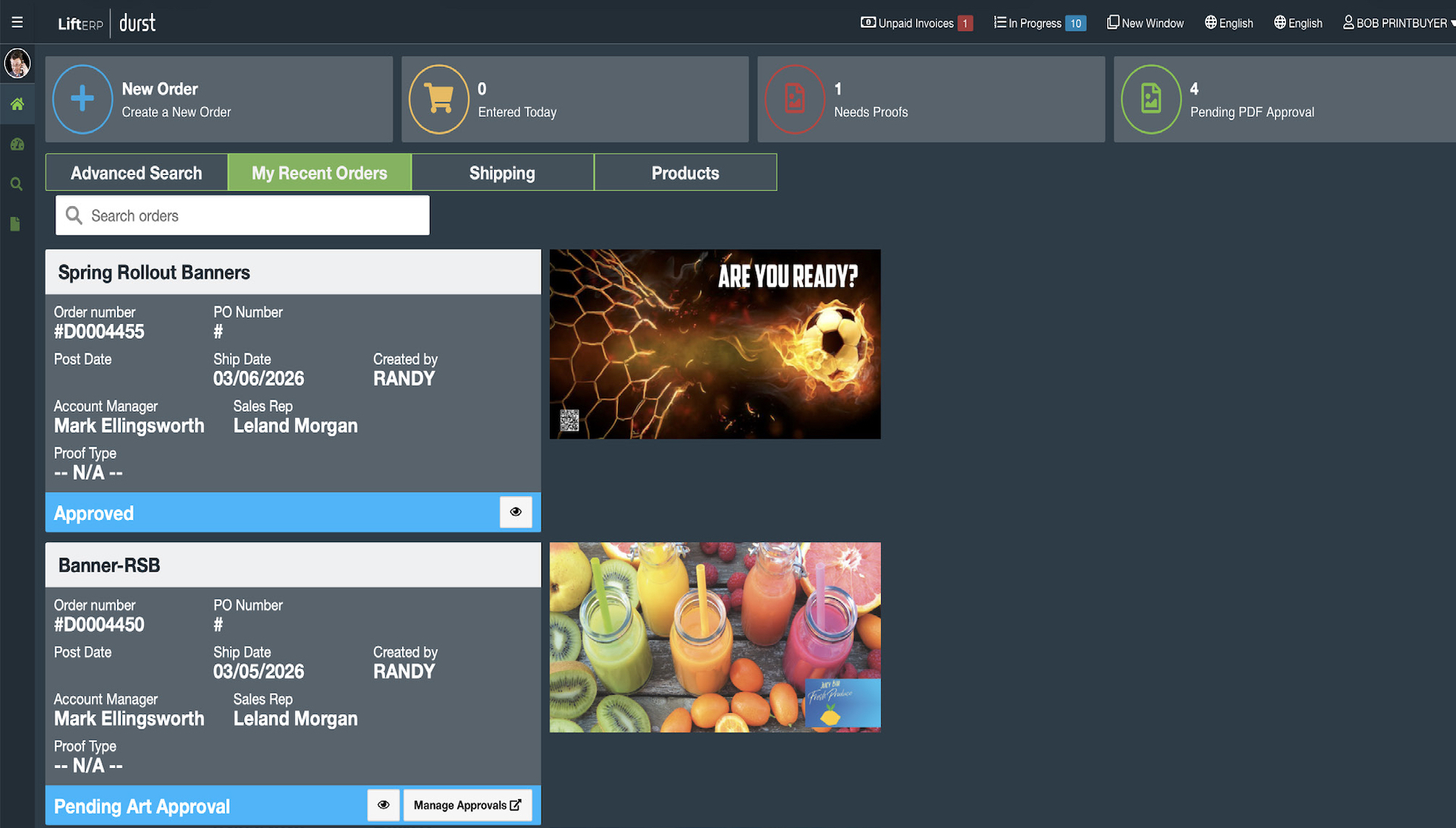
LiftERP users can also build catalogs for each customer, if desired, with full branding to streamline the process. “It’s so easy that customers are placing orders during halftime at their child’s football games,” says Corman.
It’s not unusual for Firehouse Image Center to open to find in queue new customer jobs that have been preflighted and proofs approved overnight. “We have a client who works from 4 AM to 6 AM every day and now consistently places all her orders during that window,” says Corman. “We don’t even know they are coming. But she starts dropping in orders, getting proofs back, and approving them, all before we even open for the day.”
The benefit to the customer goes beyond ordering convenience. When the customer gets the job in the queue before Firehouse Image Center even opens, that customer is able to skip the line ahead of everybody else who has to wait until Firehouse Image Center opens in the morning.
For Firehouse Image Center, all of this translates into cost savings, too. With each manual order costing the company $35 (including receiving the order, entering specifications, routing the job, communicating with the customer, and managing the work through production), the savings from automated quote and job submissions accumulate quickly.
Georgia Printco is reaping the labor savings of automated quoting, as well. But it is perhaps the ability to control the cost of goods that has been the biggest game-changer. Before LiftERP, the company operated with dual pricing calculators requiring manual data entry and allowing sales staff to quote whatever prices they chose. This led to inconsistent pricing and margin erosion.
“With Lift’s integrated pricing calculator, we now have control over what our salespeople are selling things for,” says Clarke. “We used to work in two systems—one set up in Excel and one in Microsoft Access—and customers were dual entering. It was very time-consuming and hard to manage. There was also no consistency in pricing or descriptions.”
Now, quotes are generated instantly with consistent, controlled pricing. LiftERP also ensures that production teams receive clear, consistent job specifications regardless of who created the quote, eliminating confusion from individual writing styles and interpretation.
Lift’s auditing capabilities also provide further opportunities to remove cost from the workflow. Clarke recalls one time production accidentally used a much more expensive material than was quoted. Because the pricing was set, the company lost money. “By going back into the audit, we discovered where the problem occurred,” he recalls.
LiftERP’s auditing capabilities can resolve discrepancies about the schedule, as well. When a deadline gets missed, for example, the customer might think it’s because they received the proof too late. “But we might go into Lift, see the audit trail, and discover that the customer did, in fact, receive the proof on time. It just wasn’t approved when they thought it was,” says Clarke. “This helps everyone plan better for next time.”
This is the economics of automation. Every manual touchpoint in a workflow represents both a cost and a potential bottleneck. LiftERP’s comprehensive solution minimizes or eliminates both. However, LiftERP implementation isn’t without challenges. Corman is refreshingly candid: “When installing any comprehensive system, the amount of change is often hard for people. It’s not for everybody.”
Success requires genuine organizational commitment. Someone within the business needs to focus on the system full-time during implementation, ensuring that updates are implemented, workflows are configured properly, and staff adapt to new processes. The system changes fundamental operational patterns. Operators accustomed to paper job tickets must adapt to accessing real-time information through the system instead.
This change management challenge is significant. Operations running on paper-based systems or legacy ERP solutions have developed muscle memory around existing workflows. Transitioning to LiftERP’s paperless, customer-accessible environment requires both technical implementation and cultural transformation.
However, for operations willing to make this commitment, the results justify the effort. “I couldn’t imagine running without it,” Corman emphasizes. In fact, Corman’s goal for 2026 is to transition more customers over to utilizing Lift ERP for their ordering, allowing Firehouse Image Center to get closer to full implementation, and benefits, of the system.
Comparing LiftERP to competitive ERP solutions based on feature checklists, LiftERP is a consistent winner. But focusing on features misses the fundamental difference. Yes, LiftERP offers cloud-based accessibility, intelligent estimating, real-time tracking, web-to-print capabilities, and mobile access—features many competitors advertise. But features don’t tell the full story.
LiftERP demonstrates that enterprise-level print management software can deliver on the promises that have become standard in the industry’s marketing materials. It shows that when ERP platforms are built from scratch with genuine customer transparency as foundational principles, they can transform not just how print operations manage their workflows, but how customers experience the entire production process.
Thus, the question for print operations considering ERP solutions isn’t simply which system has the longest feature list. It’s which system will enable the most fundamental improvement in operational economics while simultaneously creating the best possible customer experience. For a growing number of operations, LiftERP is the answer to both.